
Recycling and Sustainability — Gardening Services Mottingham
Our team at Gardening Services Mottingham is committed to creating an eco-friendly waste disposal area and promoting a resilient, sustainable rubbish gardening area across Mottingham and surrounding neighbourhoods. We prioritise reuse, repair and responsible disposal in every garden clearance and maintenance job. By working with local borough policies and practical on-site separation, our crews aim to reduce landfill, increase material recovery and support circular gardening systems that benefit soil health and biodiversity.We apply practical segregation from the moment we collect green waste: wood, prunings, turf, soil and compostable materials are separated on-site to maintain high-quality feedstocks for composting and wood recycling. Our approach aligns with the wider Mottingham area and the boroughs' approach to waste separation — for example, many local authorities in South East London encourage separate collections for garden and food waste and distinct containers for dry recycling streams. This helps us deliver better outcomes when materials reach sorting facilities.
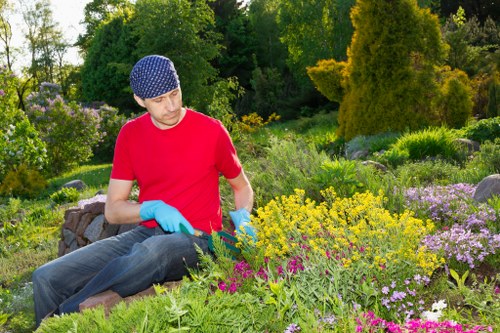 Local recycling percentage target: we have set a clear, measurable ambition — a 70% recycling and recovery rate for garden-origin materials within two years, rising to an aspirational 80% recovery on bulky garden clearances by 2028. Achieving this relies on careful separation at source, regular crew training, and close coordination with transfer stations and recycling partners. We use data-driven reporting to monitor kilograms diverted from landfill and to continuously improve our processes.
Sustainable Rubbish Gardening Area — On-Site Practices
Creating a sustainable rubbish gardening area means designing collection systems that make reuse simple. We install modular sorting bays on larger projects and provide clear labels for biodegradable, compostable, reusable and residual streams. Where possible we segregate: garden compostables, treated wood, clean timber, inert soils, and mixed organic residues. Cleaning and sorting on-site reduces contamination and increases the economic value of materials sent to composting, chipping and reuse. We run a fleet of low-carbon vans and smaller electric trailers for urban jobs to cut emissions in our service area. Our vehicles include fully electric vans for short-distance collections and plug-in hybrid vans for longer loads — all part of a plan to transition to a predominantly zero-emission fleet. Using low-carbon transport reduces the overall environmental footprint of each job while allowing us to offer cost-effective, eco-focused gardening solutions. Our drivers follow route-optimisation practices to minimise mileage and idling.
We actively cultivate partnerships with charities and community groups so reusable materials stay in local circulation. Usable plants, potted specimens, re-usable paving slabs and good-quality timber are offered to community gardens, social enterprises and local green charities. These partnerships expand the life of garden materials and support neighbourhood food-growing projects and biodiversity initiatives.
Transfer Stations, Reuse Centres and Local Infrastructure
We work closely with nearby transfer stations and household recycling centres across South East London and the riverside boroughs to make sure materials are correctly processed. Typical destinations include municipal transfer stations and civic amenity sites in Greenwich, Bromley and Lewisham where green waste is processed into compost, wood is chipped for biomass or mulch, and soils are screened for reuse. Our logistics systems are built around these local infrastructures to minimise double-handling and transport emissions.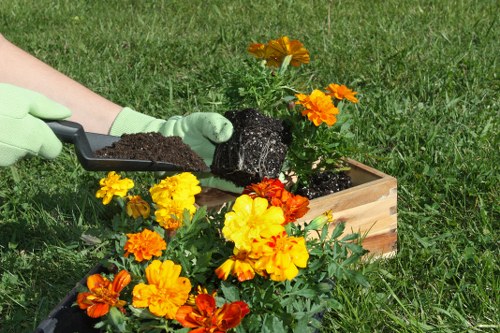 Our service emphasises material-specific recycling activities relevant to the Mottingham area: chipping woody clippings for mulch, composting soft green waste, segregating treated timber for specialist disposal, and reclaiming paving or sleepers for reuse. We provide clear manifests for every load so receiving sites can accept and treat materials correctly. When soils are contaminated or need remediation we follow best-practice disposal routes that meet borough regulations and protect local waterways.
 To support transparency and continuous improvement we publish annual summaries of our recycling performance and list the charities and civic projects we work with. Our commitment includes:
- 70% recycling target for garden-origin materials within two years.
- Regular collaboration with local transfer stations and reuse centres in neighbouring boroughs.
- Donations and material reuse partnerships with charities, community gardens and social enterprises.
Operationally, our teams are trained to sort and record every item: green waste goes to compost facilities, clean wood to chipping and biomass partners, reusable hard landscaping to community reuse networks, and mixed residuals to approved treatment centres. We use weatherproof sacks and marked containers to keep fractions separate during transport and to reduce cross contamination that can lower recycling rates.
In addition to hands-on sorting, we champion preventive measures: advising clients on planting choices that reduce pruning waste, recommending permeable paving and reusing materials in situ where safe. These softer interventions help build a full-spectrum sustainable gardening approach — from prevention to reuse, recycling and responsible disposal.
Our long-term vision for Gardening Services Mottingham is to be a local leader in creating an eco-friendly waste disposal area and a model sustainable rubbish gardening area for urban and suburban gardens alike. We combine practical on-site systems, low-carbon vans, strong charity partnerships and local transfer station coordination to make every garden project a net benefit for community resilience and the environment. Together, we can keep Mottingham greener and waste-smarter.